Case Study: How AI in Retail & E-commerce Is Driving Recommendations and Personalization
- hoani wihapibelmont
- Aug 11, 2025
- 2 min read

Introduction
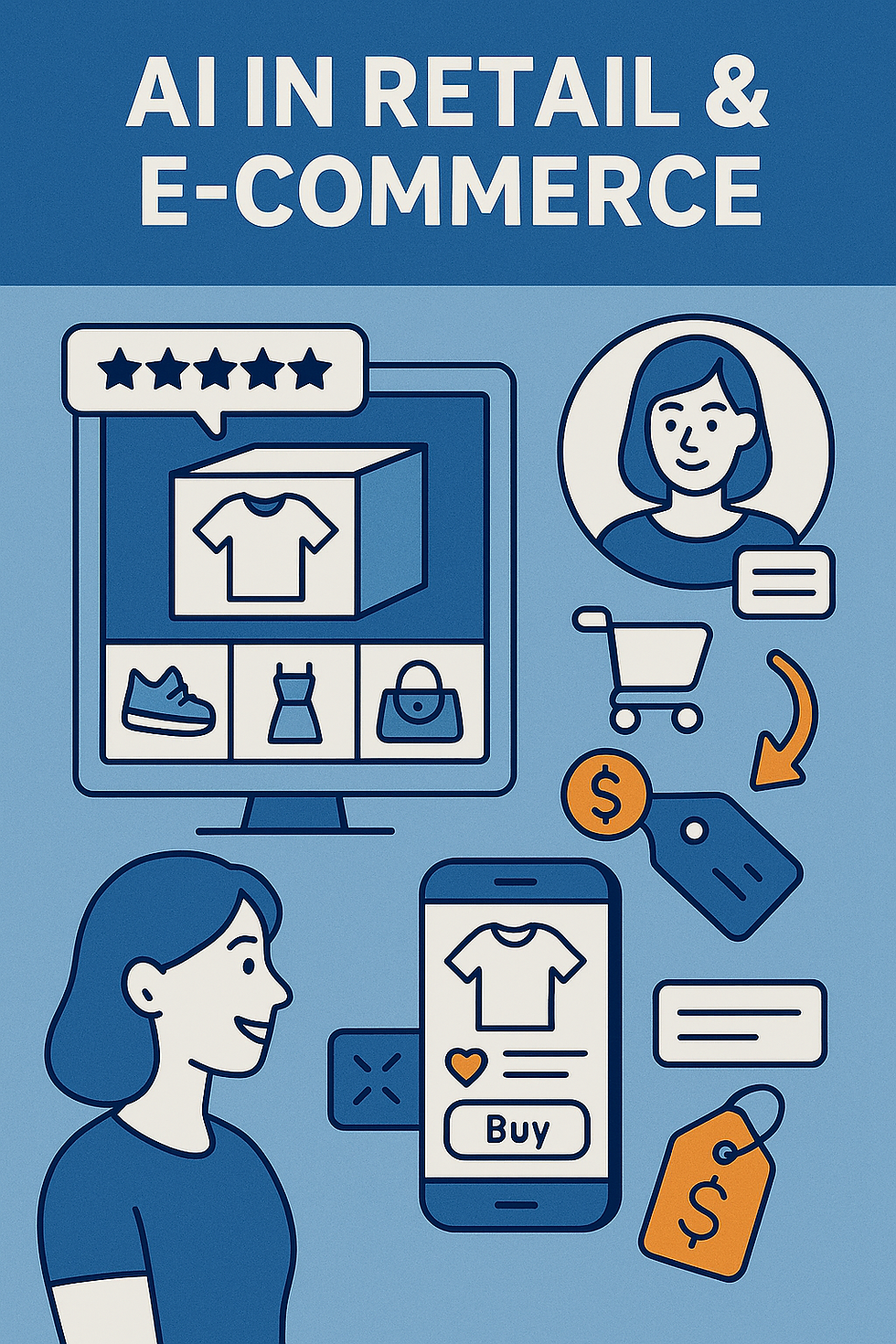
In today’s competitive retail landscape, personalization is no longer a luxury — it’s an expectation. Artificial Intelligence is helping retailers and e-commerce platforms tailor product recommendations, pricing, and marketing to individual customers in real time.
From suggesting the perfect outfit to predicting the next grocery purchase, AI is turning data into sales and customer satisfaction.
Background
Key AI applications in retail & e-commerce include:
Recommendation Engines — using collaborative filtering and machine learning to suggest products based on browsing and purchase history.
Dynamic Pricing Models — adjusting prices based on demand, competition, and customer behavior.
Visual Search — allowing shoppers to upload photos to find similar products instantly.
Customer Sentiment Analysis — understanding feedback to improve service and product lines.
Problem Statement
Before AI-powered personalization, retailers faced:
Low conversion rates from generic product suggestions.
Lost sales due to irrelevant promotions.
Inefficient marketing spend from poorly targeted campaigns.
Implementation Example
Case: A fashion e-commerce platform implemented AI-driven recommendations.
Tool: Hybrid recommendation engine combining collaborative filtering with deep learning.
Process:
Collected user data from browsing history, purchases, and wishlist items.
AI analyzed trends to predict style preferences.
Personalized product recommendations were displayed on-site and in email campaigns.
Outcome: Increased average order value by 25%, boosted click-through rates by 38%, and improved repeat purchases.
Impact & Benefits
Higher sales conversions from targeted recommendations.
Improved customer loyalty through personalized experiences.
Better inventory management from demand prediction.
Challenges
Data privacy concerns around customer tracking.
Cold start problem for new users with little browsing history.
Algorithm bias potentially limiting product exposure.
Future Outlook
Expect to see:
Real-time AI personalization across websites, apps, and in-store kiosks.
Hyper-personalized marketing using multimodal AI (image, text, voice).
Integration with AR/VR shopping experiences for immersive product discovery.


Comments